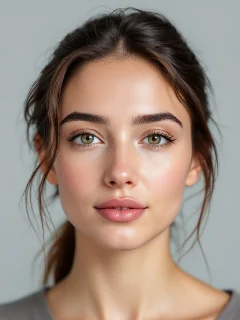

What makes a diamond face shape
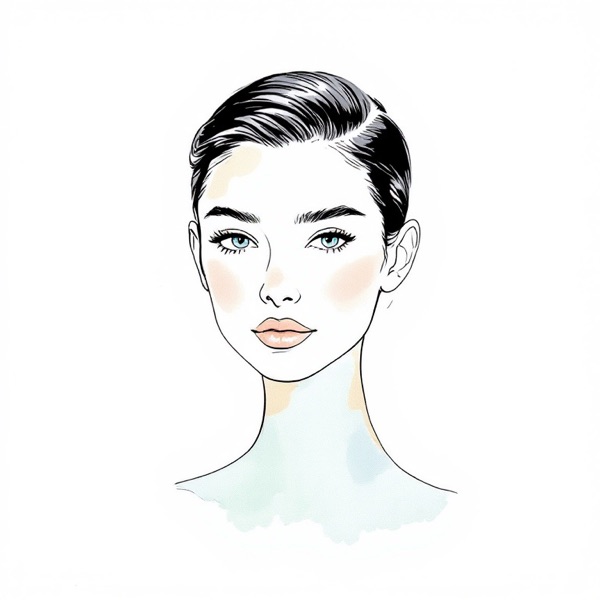
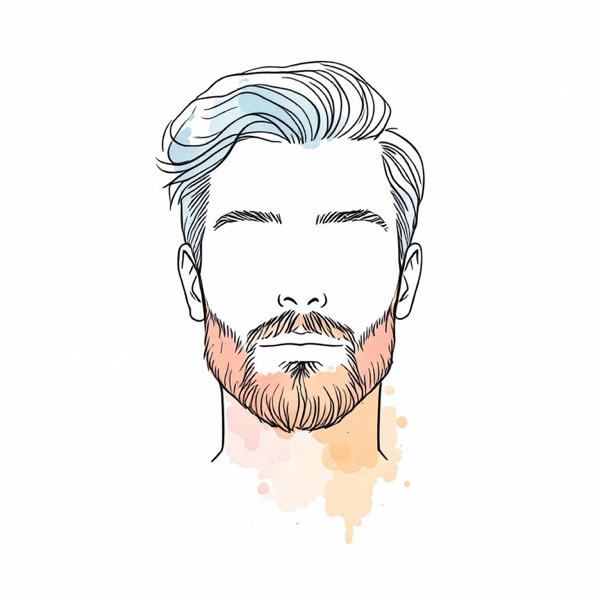
A diamond face shape has one clear widest line: the cheekbones. Above them the forehead narrows toward the temples, and below them the jaw narrows to a slim, often pointed chin. From the front, the cheekbones form the two side points of the outline, like the diamond on a playing card.
Diamond face shapes vary more in length than you might expect: some are long and angular, others shorter and softer. What they share is a ratio of widths, with the forehead and the jaw both clearly narrower than the cheekbones. That is also why a diamond face shape is easy to misread when hair falls over the temples or the jaw corners.
How to check for a diamond-shaped face
A photo works well for this shape, because you compare widths within one image and need no units.
- Stand about 1 m (3 ft) from the camera, lens level with your eyes, face straight on.
- For this photo only, pull your hair back off your forehead and away from your cheeks and jaw.
- Mark the widest point of each cheekbone, a little below the outer eye corners, and measure between the marks. This is your reference width.
- Measure the forehead along the brow line, temple to temple, and the jaw from one corner to the other.
- Divide each of those two by the cheekbone width.
If both ratios come out at about 0.85 or lower, you are looking at a diamond face shape. A forehead ratio of 0.95 or more points to a heart instead, and a jaw nearly as wide as the cheekbones points toward round, square or oblong, depending on length and the jaw corners. Face length (hairline to chin) and chin width against mouth width do not decide a diamond, but they help separate it from those neighbors.
These cut-offs come from the detector's first rule set and are still being tuned on annotated photos, so read a result near a boundary as a range, not a verdict. The face shape detector makes this comparison from a selfie, entirely in your browser, so the photo stays on your device.
Diamond vs. heart, oval and oblong
Most mix-ups involve one of three shapes, and the widths you just measured tell them apart.
- Heart. These two are easy to mix up, since both have prominent cheekbones and a slim chin. The forehead decides: a heart-shaped face keeps it nearly as wide as the cheekbones, and a diamond face does not. If your forehead lands between the two marks, you may see a result such as "Between Diamond and Heart".
- Oval. An oval face is also widest at the cheekbones, but it narrows gently at both ends into a rounded chin and soft jaw corners. A diamond narrows more steeply above and below the cheekbones, so they stand out as distinct points. A face whose forehead and jaw sit just above the 85% mark can land between diamond and oval.
- Oblong. A long diamond face shape can pass for oblong at a glance, since both are clearly longer than they are wide. An oblong face, though, keeps the forehead, cheekbones and jaw within about 10% of each other, so its sides run fairly straight, while a diamond narrows well above and below the cheekbones.
Styling a diamond face shape, zone by zone
Where a heart-shaped face needs width low, a diamond face shape needs it at both ends. It helps to think of your face in three zones.
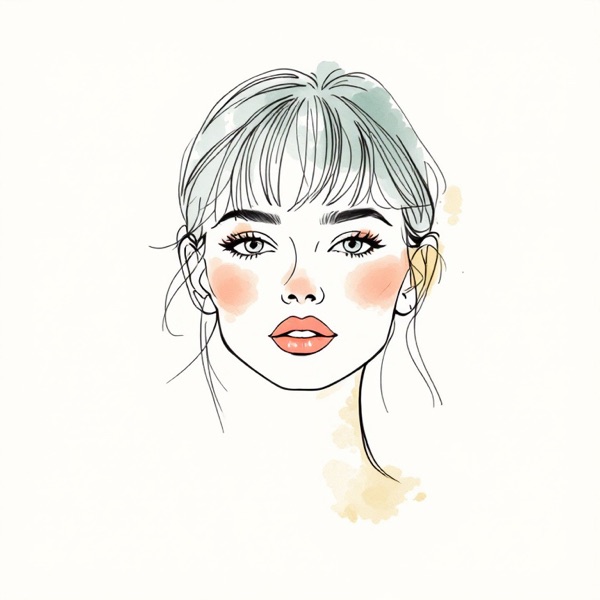
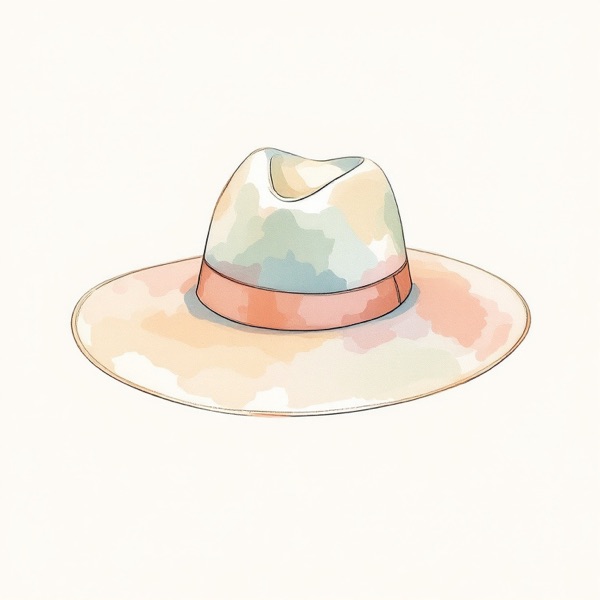
- Forehead: add width. Side-swept or curtain bangs spread across the narrow forehead; on short hair, a textured fringe crop, a side part with a fringe or a messy crop brings texture forward. Browline and cat-eye frames widen the brow line, a medium-brim hat adds width at the forehead, and a cuffed beanie worn a little high shows more of it. In makeup, highlight the center and sides of the forehead.
- Cheekbones: keep them soft. A curtain fringe that falls past the cheekbones softens them, oval frames bridge the forehead and cheekbones, and studs keep attention off the cheekbone width. Keep any contour under the cheekbones light.
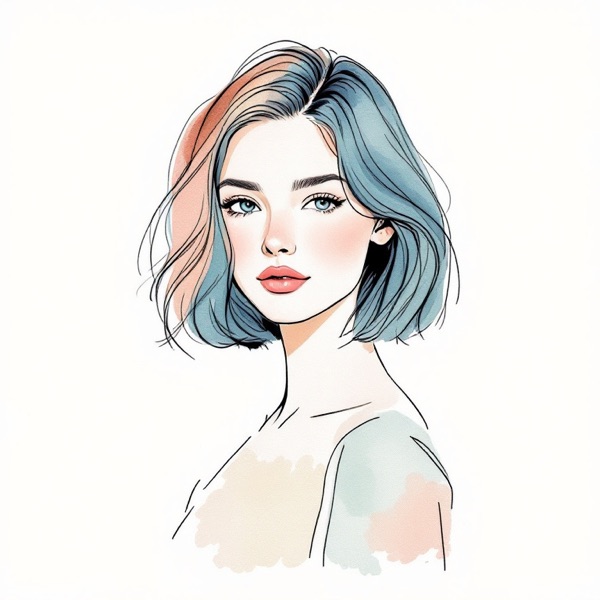
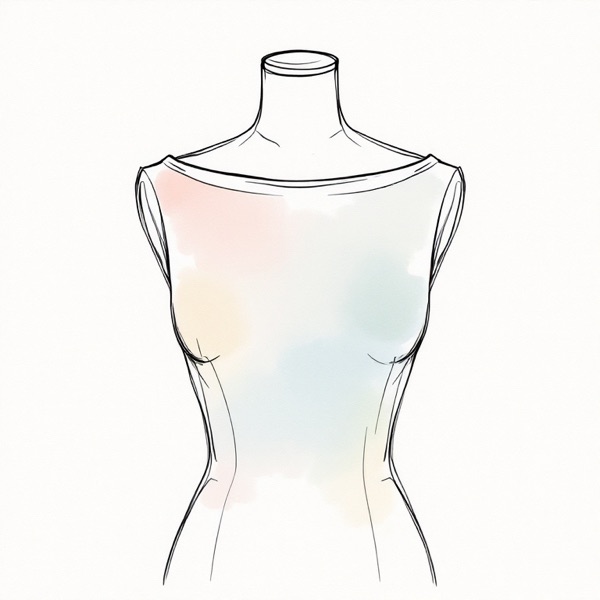
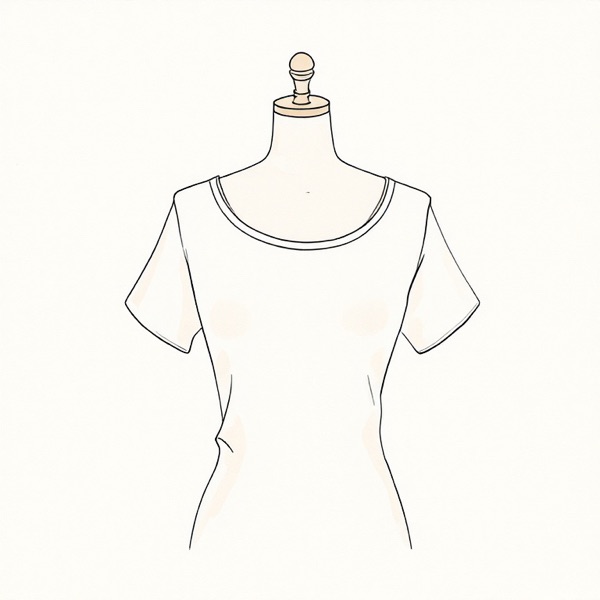
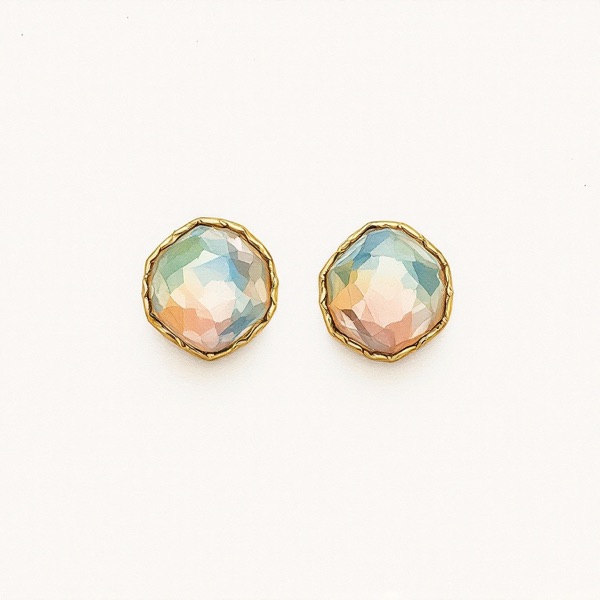
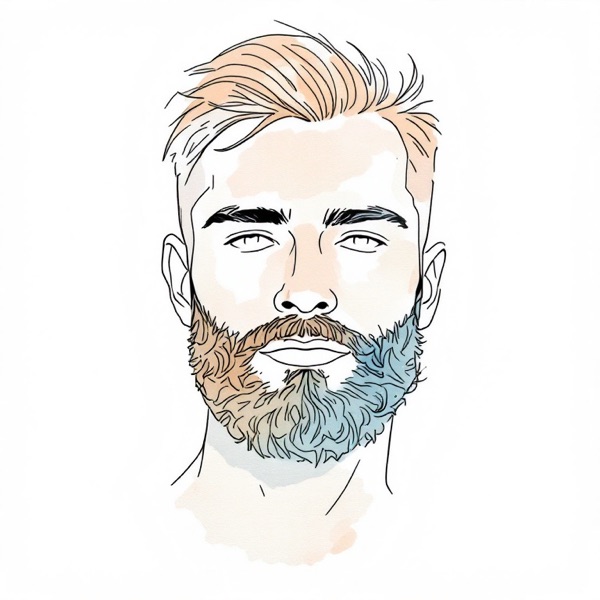
- Jaw and chin: add width. A chin-length bob with volume, a textured lob, soft waves that push out at the jaw, or layers that start below the cheekbones all widen the jaw line; on a crop, a low taper that keeps the sides fuller does the same. A fuller chin beard, a short boxed beard or stubble kept even along the jaw broadens it. Small drops that widen near the jaw and medium hoops that hang below the cheekbones add width low, and a boat neck, scoop neck or spread collar opens up the space below a narrow chin. Highlight the center of the chin.
The styles to skip either narrow the forehead and jaw further or add width at the cheekbones. That covers slicked-back hair, flat sides tucked behind the ears, a high skin fade and tight sides with a tall top; narrow frames and boxy square frames; wide earrings at cheekbone level and long thin spikes; a deep V-neck, which repeats the taper, or a tight turtleneck, which crowds the chin; and a cloche pulled down to the brows.
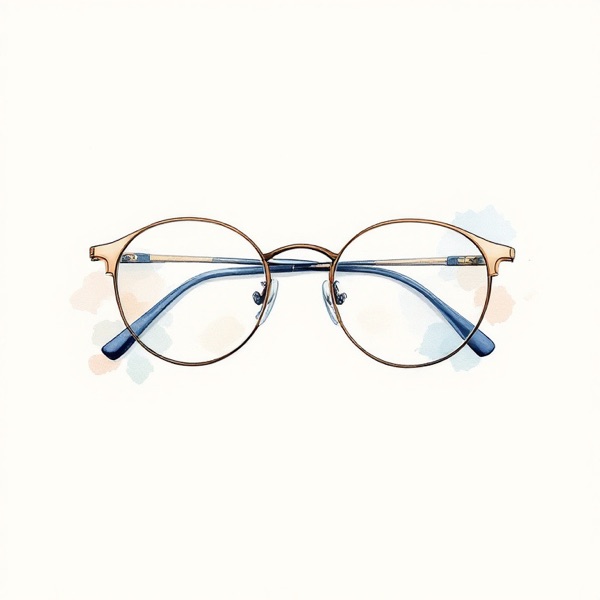
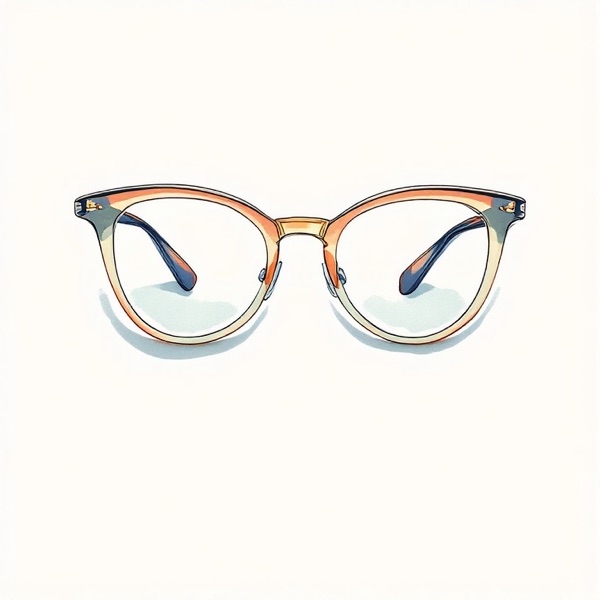
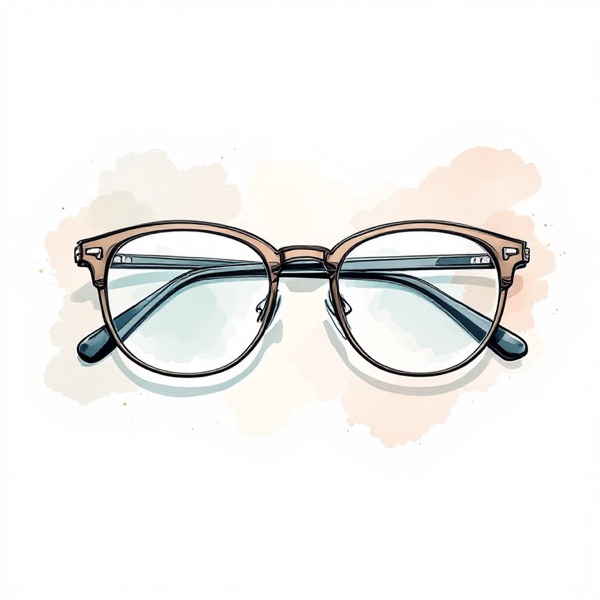
With glasses, frame width matters as much as frame shape. Look for a frame about as wide as your cheekbones, with its strongest line along the brow. A frame narrower than the cheekbones leaves them extending past it on both sides, which makes them look wider by contrast.
Hairstyles for a diamond face shape
On a diamond face shape, a good cut does two things at once: it adds width at the forehead and at the jaw, and it keeps the sides soft at cheekbone level, where the face is already widest. A fringe takes care of the top, and length or fullness takes care of the bottom.
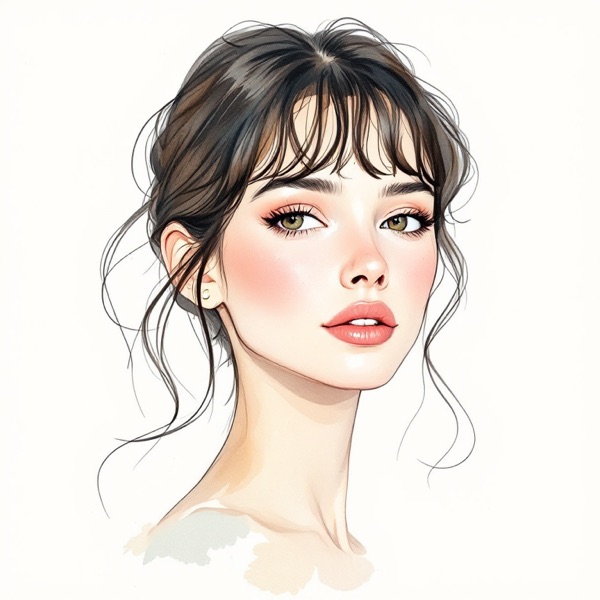
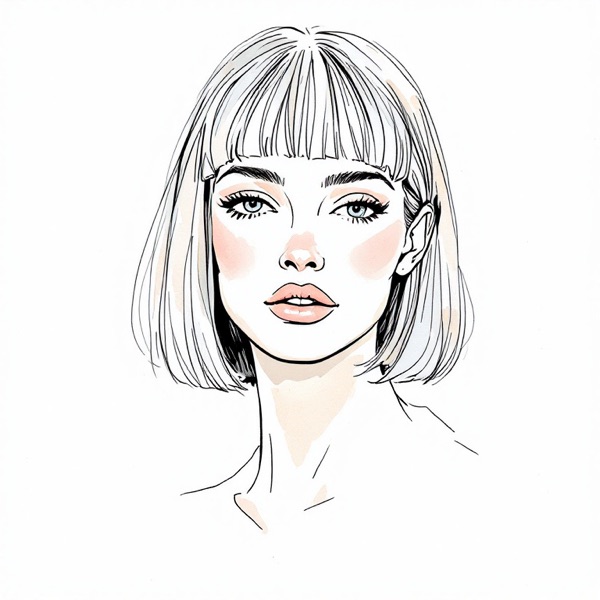
Women's hairstyles. Bangs are the quickest way to widen the narrow forehead of a diamond face shape. Side-swept bangs spread across it, and curtain bangs widen it too while their ends fall softly past the cheekbones. Below them, choose a length that puts volume at the jaw: a chin-length bob with volume sits right where the face narrows, and a textured lob adds movement at collarbone length. On longer hair, ask for long layers that start under the cheekbones rather than at them, then style soft waves that push out at the jaw. When you wear your hair up, keep a fringe or a few loose pieces at the temples. A slicked-back ponytail, a high tight bun or hair tucked behind the ears puts the cheekbones on full display with nothing at either end to balance them.
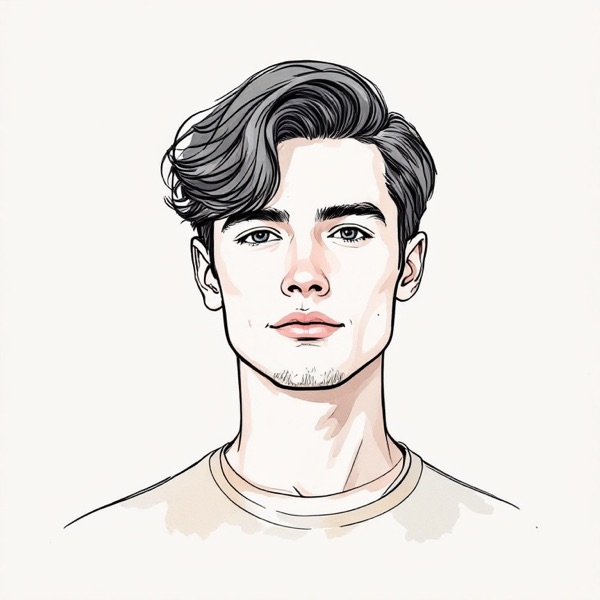
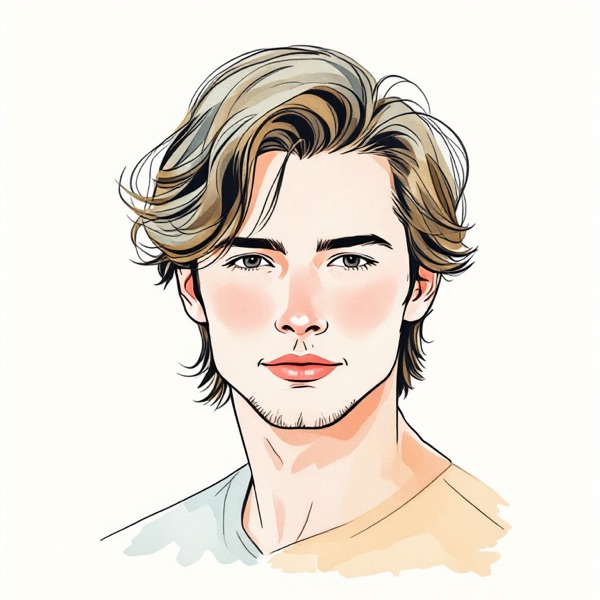
Men's hairstyles. Bring texture forward and keep some fullness at the sides. A textured fringe crop or a messy crop pushes hair over the forehead, and a side part with a soft fringe adds width at the top without a hard line. Medium length swept forward fills in around the ears and toward the jaw, and a curtain fringe widens the forehead while softening the cheekbones. If you prefer short sides, ask for a low taper with fuller sides, so the barber leaves some length beside the jaw instead of taking the sides down to the skin. A high skin fade, a slicked-back undercut or tight sides with a tall top leaves the cheekbones as the only wide point.
At the salon or barber. Describe the three zones rather than naming a single cut: fullness from the jaw down, a fringe or side part across the temples, and sides left soft at the cheekbones. That brief works at almost any length, and it leaves your stylist room to work with the texture of your hair.
Photographing a diamond face shape fairly
A diamond face shape is read from two narrow zones, so small changes in a photo can move the result.
- Camera below your eyes. A low angle exaggerates the cheekbones. Hold the phone level with your eyes, about 1 m (3 ft) away; closer than that, lens distortion changes the proportions.
- Hair at the temples or jaw. Bangs or loose strands at the temples cover the forehead's true width, and hair over the jaw corners changes the jaw.
- A turned head. Even a slight turn makes one cheekbone look wider than the other, and it skews a face symmetry test as well.
- Expression. Smiling lifts the cheeks and changes the line of the jaw, so keep a relaxed, neutral face for the scan.
- Overhead light. Light from directly above deepens the shadows under the cheekbones, so they stand out more in the photo than they do in person. Face a window or another soft, even light source instead.
For everyday photos, shoot at eye level and try tilting the camera slightly down, which shows more forehead. And if you are curious how your proportions compare with classic ratios, the golden ratio face calculator uses the same private, in-browser scan.
Updated 2026-09-26