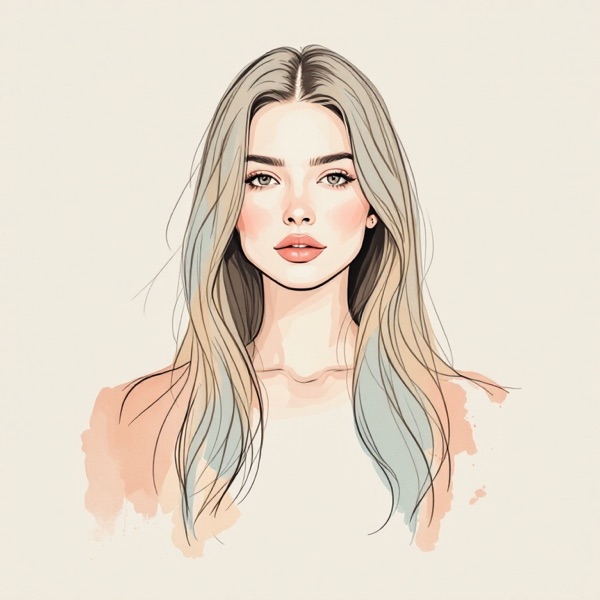
Plan long hair around what you want to keep
Long hair can mean very different things to different people. A style just past the shoulders may feel long to someone growing out a bob; another person may be protecting length that reaches much farther down the back. Before comparing a haircut, describe the length you have and the part you want to preserve.
The planner separates three decisions: the outline you like, the amount of length you want to keep and the conversation to have before cutting. It starts with three illustrated references rather than a ranked list. Your choice of filter changes the options shown, not a score about which style is right for you.
If you are still deciding between short, medium and long haircuts, start with what haircut should I get?. This page helps with the smaller decision of what to do while working with longer lengths.
Compare three long hair outlines
Face-framing layers bring a shorter front section into the comparison. They can change the visible outline around the cheeks without requiring the back to be cut to the same length. Check whether those pieces still do what you want when the hair is tucked behind the ears or tied up.
Fuller ends show a more continuous perimeter with less layering. Compare this when you prefer a simple outline or want to discuss how much weight to retain at the bottom. An illustration cannot establish the condition or density of your ends.
A low ponytail compares a tied-up way of wearing the length. It is not a new haircut. Use it to explain that you want enough length in the front sections to gather the hair comfortably as part of your usual day.
Agree on your long hair length
Choose “keep the overall length” if preserving the long outline is your priority. That does not automatically mean no trimming; it means the amount to remove needs to be discussed before the stylist starts. Point to where you want the dry ends to sit.
“Trim the ends only” communicates a more limited intention. It still needs a shared understanding of what an end trim means on your head. Show the amount with your fingers or agree on a measurement at the appointment. A vague “just a little” can leave two people imagining different amounts.
If you are open to a shorter length, select “discuss a shorter length.” You can compare the same references while making clear that the final length is undecided. The downloadable card records that distinction so a favorite illustration is not mistaken for permission to cut to its apparent length.
Think about long hair and texture
Long hair with layers behaves differently when worn straight, wavy, curly or coily. Look at your hair after an ordinary wash rather than only after a salon finish. Tell the stylist which version you expect to wear most days.
Longer sections can affect how a curl falls, and removing weight can alter its visible shape. That does not create one rule that every curly head should follow. Discuss shrinkage, density and the dry outline with someone who can see and handle your actual hair.
The illustrations do not infer your natural texture or promise that a cut will straighten your hair. Look at the amount of framing and the perimeter, then discuss how those choices translate to the texture you actually wear. If a reference would require a finish you rarely do, explain that constraint rather than treating it as an everyday forecast.
Fit long hair into your routine
Think through a normal week. Do you tuck the front behind your ears, exercise with the hair tied back or wear glasses? Those details help determine how short the front pieces can be while still doing what you need.
A fringe is a separate decision from layering through the back. If the change you want is mainly around the forehead, the bangs filter compares three fringe shapes. Decide whether you want a fringe before combining it with a larger change to the perimeter.
Long hair for men uses the same questions about length, texture and upkeep. The men's face-shape guide can add framing ideas if that is useful, but it does not replace the practical details of how the hair grows and how you wear it.
Use a reference without copying every detail
Illustrations make it easier to isolate an outline. They also leave out many details, including flyaways, growth direction, density changes and how the hair looks from behind. Choose the part you like and name it: a fuller edge, lower framing, looser movement or enough length to tie back.
The three looks use existing reviewed illustrations from the site's hairstyle library. They are not photographs of customers or before-and-after results. The planner keeps your own choice visible instead of claiming a universal ranking of long hairstyles.
If you want to explore a photograph-based change, visit hairstyle try-on and check its current availability. If color is the real question, compare the copper shade planner separately so the new color does not distract from the length decision.
Take the discussion card to your appointment
Save the selected look and length preference as a PNG. The card pairs the illustration with a request and a reminder to agree on the dry length, shortest layer and styling routine. No account or photo is needed to make it.
Use it as the opening of a conversation. Show your actual hair, ask the stylist to translate the reference into an achievable cut and settle the amount to remove before work begins. That agreement matters more than matching every strand in the drawing.
Updated 2026-10-11