


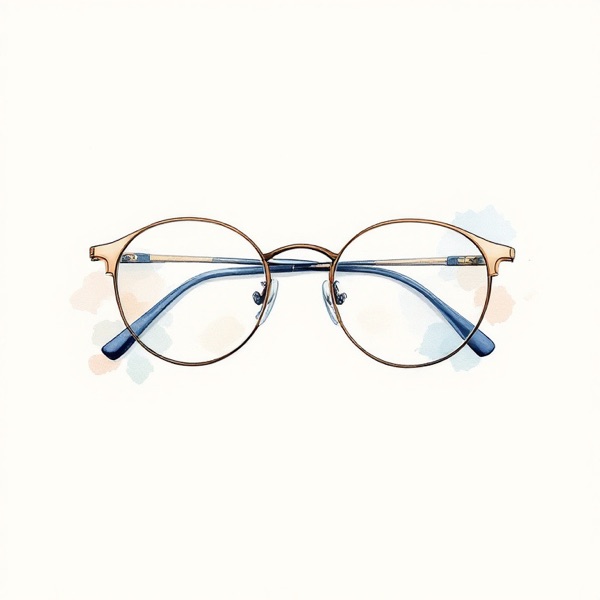
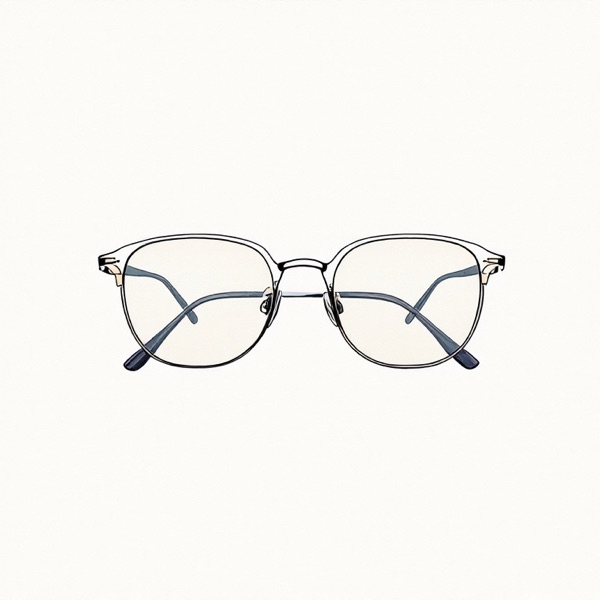
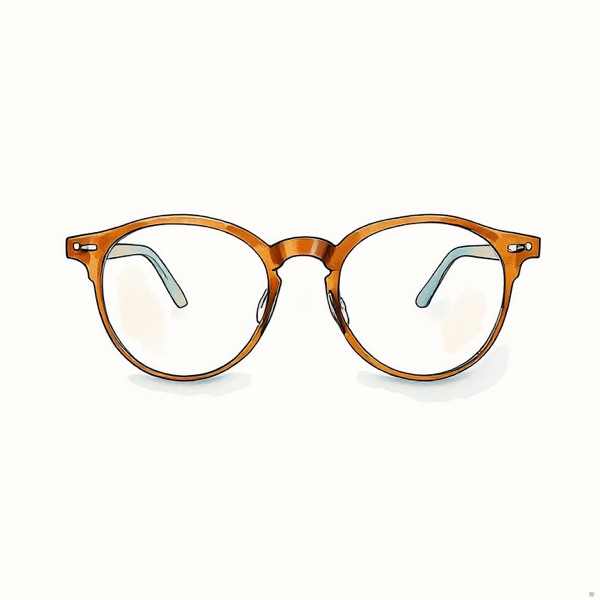
How glasses for face shape rules work: contrast and scale
Choosing glasses for face shape comes down to two ideas, and every row of the chart above uses both. A frame should add a line your outline doesn't have, and its size should match your face.
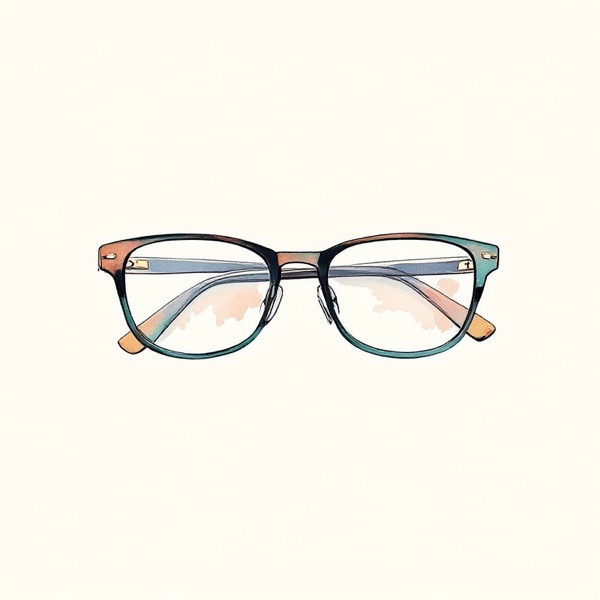
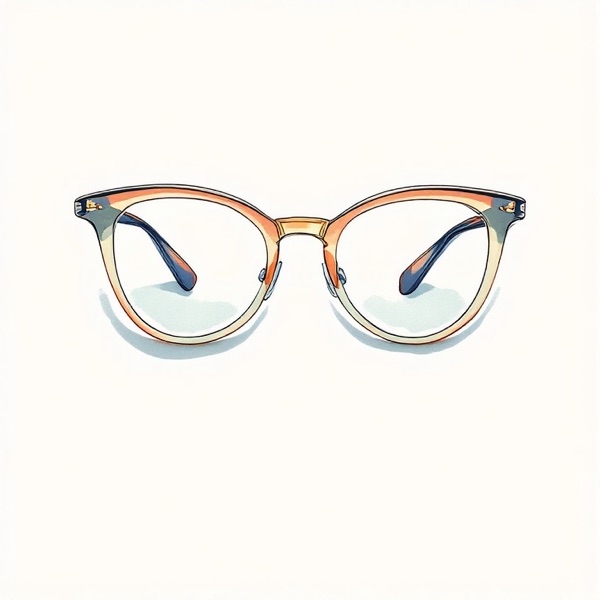
Contrast with the outline. Straight lines stand out against a curved face, and curves against an angular one, which is why rectangular frames sit on the round row and round frames on the square row. Contrast also covers where a frame carries its weight: a heavy top bar adds width at the brows and a heavier lower rim adds it lower down, so the right frame puts width where your face is narrow.
Match the scale. A frame much wider than your face at the temples looks oversized, and a much narrower one makes the face around it look wider. Rim weight works the same way: fine features suit thin metal, while strong brows or a broad jaw can carry thick acetate.
That is why glasses for face shape advice can look contradictory. The same frame can be a try for one shape and a skip for another, because only the face around it changes:
- Browline and cat-eye frames add width along the brows. That balances a narrower forehead on a diamond or triangle face but adds to the widest part of a heart shape.
- Bottom-heavy frames carry their weight low, balancing the narrow chin of a heart shape but adding to the broad jaw of a triangle.
- Oversized round frames add width at the cheekbones: useful on an oblong face, a repeat of the circle on a round one.
Reading the chart, shape by shape
Each row of the glasses for face shape chart names three frames to try and two that are often skipped. The outline behind each row explains the picks:
- Oval. Longer than it is wide, widest at the cheekbones, with a soft jaw. Rectangular frames add a little structure, a wayfarer's wider top mirrors the cheekbones, and round frames echo the jaw. Both skips are about size: oversized frames reach past the cheekbones, and very narrow ones look small.
- Oblong. Clearly longer than it is wide, with similar widths from forehead to jaw. Tall frames fill more of the height, oversized round frames add width at the cheekbones, and decorative temples pull the eye sideways. Narrow rectangular and small frames leave more length showing.
- Round. About as wide as it is long, with soft curves. Rectangular, cat-eye and browline frames add straight lines and lift; small and oversized round frames repeat the circle. The page on glasses for round face shapes goes further, including how wide to go.
- Square. A square face shape has a strong jaw about as wide as the cheekbones. Round frames, oval frames and thin rounded rims bring in curves, while square frames repeat the jaw's angles and heavy rectangular frames add weight at its width.
- Heart. A heart-shaped face is wide at the forehead and narrows to a slim chin. Bottom-heavy frames add weight low, rimless or light frames keep the top quiet, and oval frames sit between the two widths. Browline frames and upswept cat-eyes add width where the face is already widest.
- Diamond. Widest at the cheekbones, with a narrower forehead and chin. Oval frames bridge the forehead and cheekbones, and cat-eye and browline frames widen the brow line. A narrow frame sets off the cheekbone width, and a boxy square frame adds more width at that level.
- Triangle. Widest at the jaw, with a narrower forehead. Browline frames, cat-eyes and frames wider at the top build width up high. Narrow small frames let the jaw dominate, and bottom-heavy frames add weight low.
Glasses frames for face shape: size before style
A glasses for face shape chart tells you which shape to try, not which size to buy, and a frame from the right row in the wrong width still looks off. Four checks settle most of the fit:
- Width. The frame front should be about as wide as your face at the temples. Arms that bow outward mean it is too narrow; a gap beside your head means it is too wide.
- Bridge. It should rest on your nose without pinching, and without sliding when you look down. For a low or flat bridge, adjustable nose pads or a low-bridge fit lift the lenses off your cheeks.
- Lens height. The top rim should follow your brows or sit just below them, not cut through them, and the lower rim should clear your cheeks when you smile.
- Temple length. The arms should curve down just behind your ears. Too short and they press on your ears; too long and the frame slides down your nose.
On the inside of one arm you'll usually find a size code such as 52-18-140, which gives the lens width, the bridge width and the arm length in millimeters. Copy the code from a pair that fits and filter by it when you shop online. The lens shape can change from pair to pair while those numbers stay close.
This site doesn't sell frames, so the glasses for face shape chart names generic styles, not products. Any brand's browline or oval frame follows the same geometry.
When your face sits between two shapes
Plenty of faces sit near the border of two shapes. When the top two are close, the scan result says so, for example "Between Heart and Diamond." With a glasses for face shape chart, that means reading two rows instead of one.
Start with frames on both try lists, then drop anything on either skip list. Oval frames are a try for heart and diamond alike, while browline and cat-eye frames are tried on one row and skipped on the other, so the oval is the safer start.
When the rows pull in opposite directions, let your most visible feature decide. Round and square faces are both not much longer than they are wide, but one row adds angles and the other adds curves: if your jaw turns a clear corner, lean square, and if it curves, lean round. A thin rectangle with softened corners sits between the two. Between oval and oblong, a frame with a little more lens depth suits both rows.
Glasses for men: same geometry, different details
The glasses for face shape rules are the same for men and women, since the seven outlines are measured the same way on every face. What often differs is the detail around the frame:
- Brows. Heavy, straight brows already draw a line near the top rim, so let the frame follow it rather than cross it. On the diamond and triangle rows, a browline frame and strong brows read as one bold bar, which adds the width those rows are after.
- Jaw. A broad jaw is one more reason not to go narrow: a small frame leaves the lower face as the widest line.
- Beard. A full beard adds width low. On a heart shape it does part of a bottom-heavy frame's job; on a triangle face it adds to the jaw, so a strong top line matters more.
- Size. Men's frames are often sold wider, but the numbers inside the arm matter more than the store section.
If you'd rather not wear the cat-eye a row suggests, a browline or a rectangle with raised outer corners puts the weight in the same place. The face shape men guide pairs one frame per shape with a haircut and a beard.
Sunglasses follow the same rules
Sunglasses sit on the same face, so the same glasses for face shape rows apply, with two changes. A tint turns each lens into a patch of color, so a lens that contrasts with your outline, or repeats it, is easier to notice than on clear glasses. And sunglasses are cut larger for coverage: a frame a little wider than your temples is fine, but it shouldn't extend past your cheekbones.
Aviators show how the rows carry over. Their teardrop lens is widest at the top, so it works like the frames wider at the top on the triangle row, and round sunglasses soften a square face just as round optical frames do.
Check your face shape before you shop
Most glasses for face shape advice assumes you already know your shape, and that is the weak step: in a mirror, it is hard to tell whether your jaw is about as wide as your cheekbones. The scanner at the top of this page is the site's free face shape detector. It measures your face length, widths and jaw corners from one selfie, in your browser, and the photo never leaves your device.
Then go back to your row, or to both rows if the result names two shapes, and try the first frame on the try list in the size of your current pair. To check with a tape measure instead, the face shapes guide explains how all seven are measured.
Updated 2026-09-27