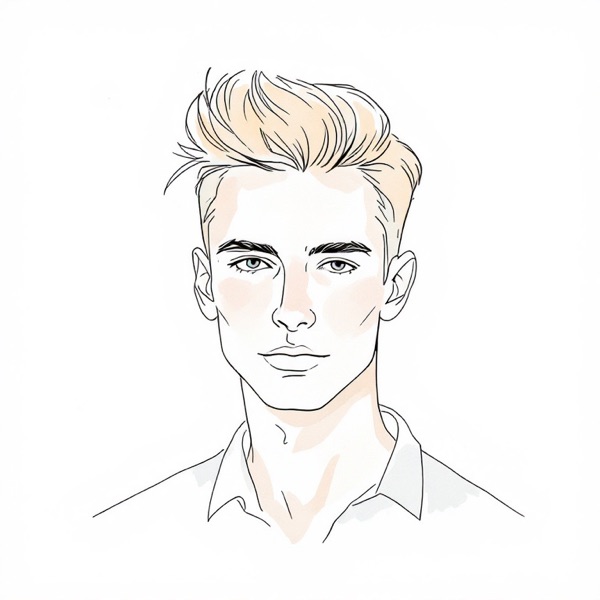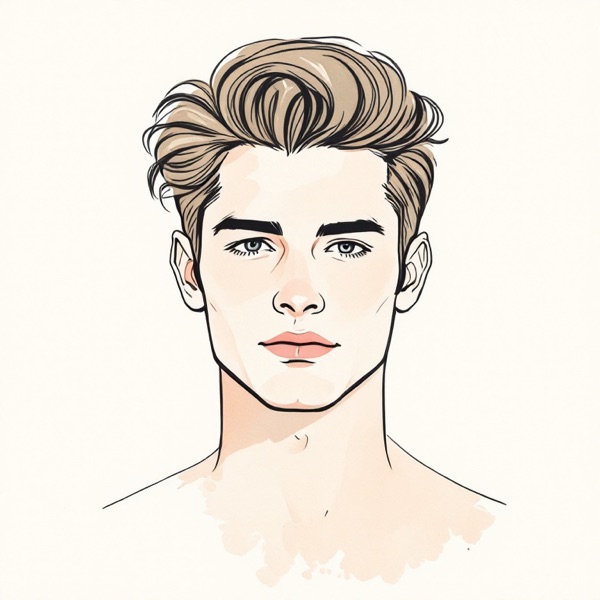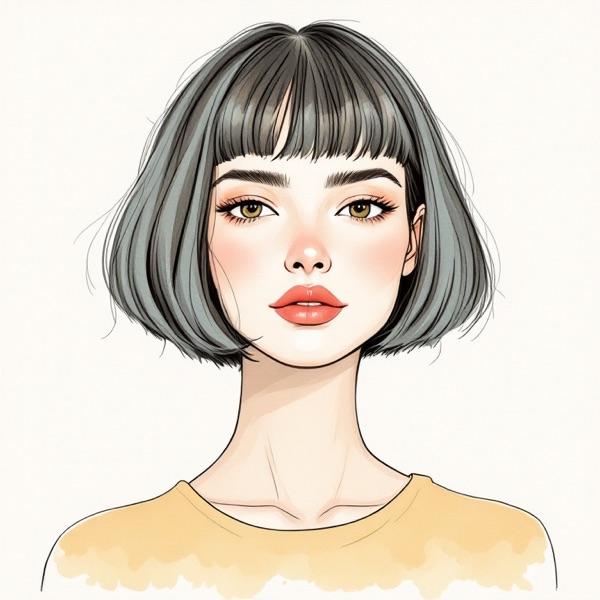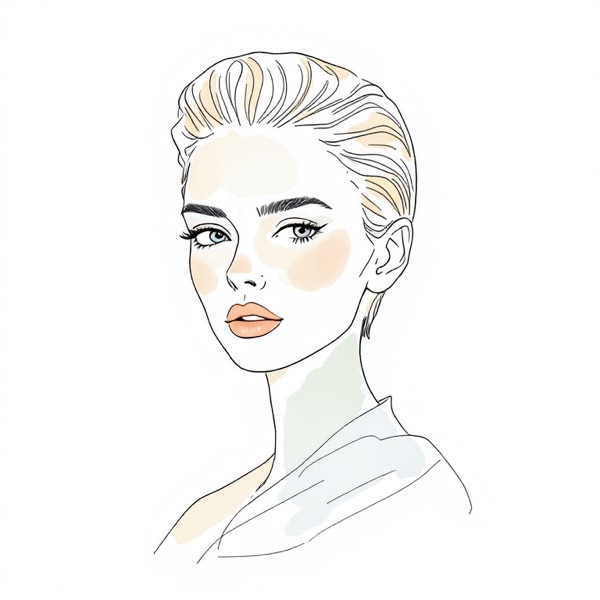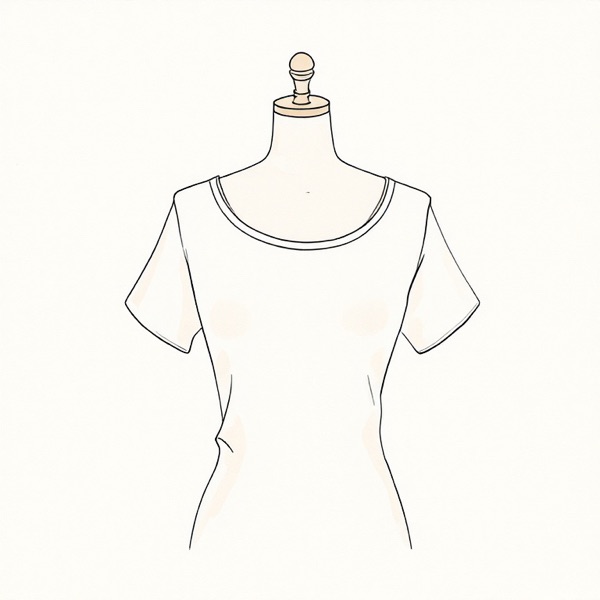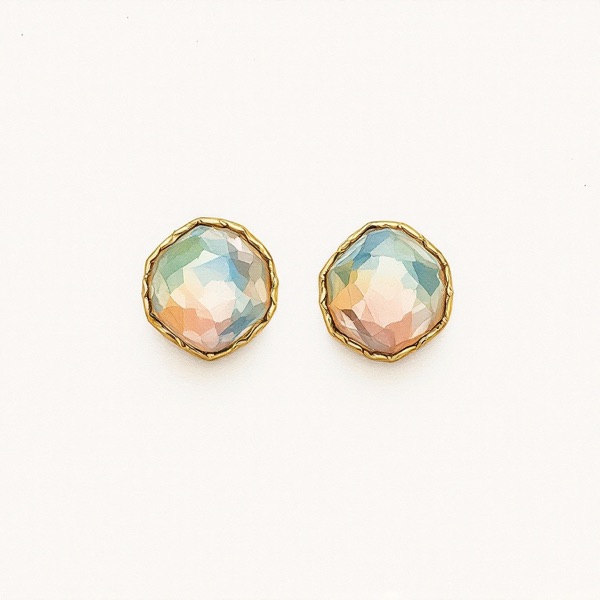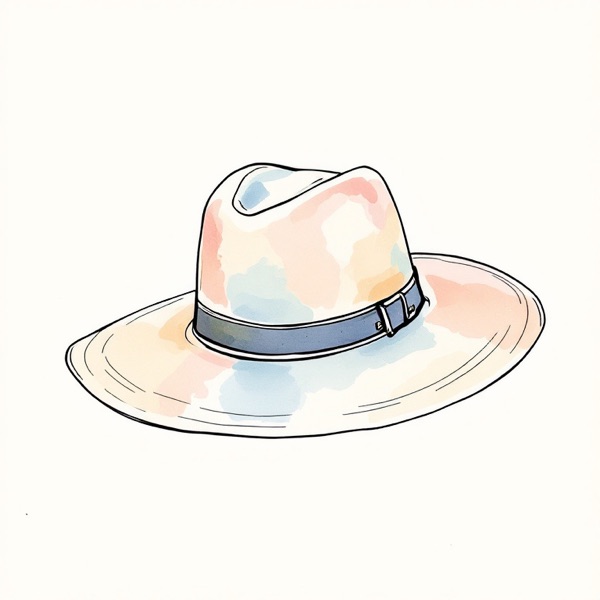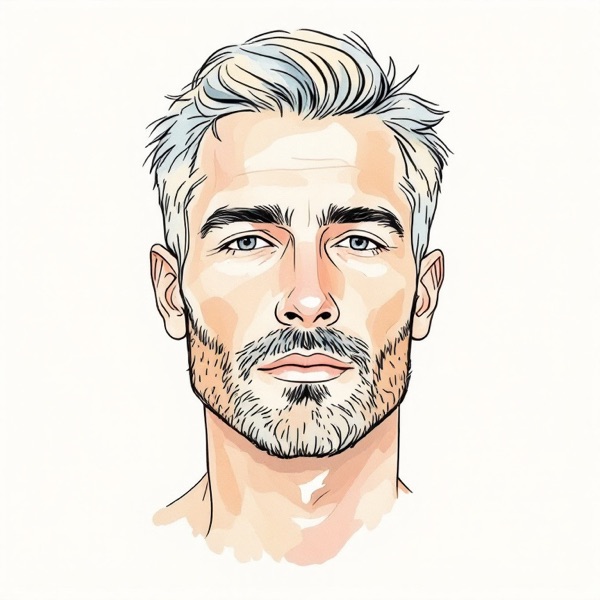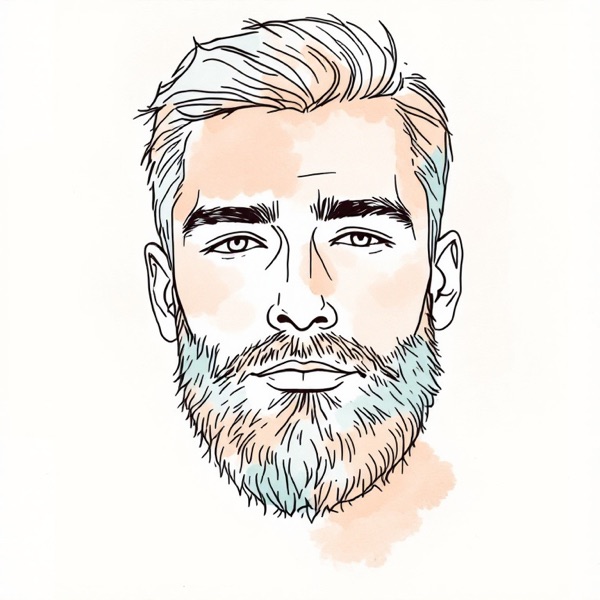


What a triangle face shape looks like
A triangle face shape widens from top to bottom. The forehead is the narrowest line, the cheekbones are wider, and the jaw is at least as wide as the cheekbones, often the broadest line in a front photo. It mirrors the heart shape, and you may also see it called a triangular face shape, or a pear-shaped face, after a pear with its narrow end on top.
The jaw corners can be angular or softly rounded, and the face short or long; what decides the shape is the order of the three widths, from the forehead down to the jaw.
How to tell if you have a triangular face shape
Here you rank rather than calculate. Measure three widths with a soft tape measure or on a straight-on photo, then put them in order.
- Tie your hair back. Long hair around the jaw covers its corners, the width this shape depends on.
- Jaw: straight across between the two jaw angles, the corners below your earlobes where the jawline turns upward.
- Cheekbones: between the outermost points of your cheekbones.
- Forehead: between your temples, at eyebrow height.
- Length: from the middle of your hairline down to the tip of your chin. It does not decide a triangle, but it helps tell one apart from a square or round face.
If the jaw ranks first or ties with the cheekbones, and the forehead ranks last, you are looking at a triangle; that is also the rule the face shape detector applies. It estimates these widths from a selfie with 478 landmark points, entirely in your browser, and gives a face near a boundary a "Between" result instead of a forced answer. Its rules are still being tuned on annotated test photos.
Triangle vs. square, round and heart
- Square: look at the forehead. A square face also has a wide jaw with defined corners and is not much longer than it is wide, but its forehead is close to the width of the cheekbones and jaw. On a triangle the forehead is clearly the narrowest line. A wide, angular jaw under a somewhat narrower forehead can fit both, and then you may see "Between Triangle and Square".
- Round: look at where the width sits. A round face is widest at the cheekbones, with soft jaw corners, and about as long as it is wide. Photographed from below it can look widest at the jaw, but if your jaw measures narrower than your cheekbones, the shape is not a triangle.
- Heart: the inverse. A heart-shaped face is wide at the forehead and narrow at the jaw, so much of the advice below is heart advice turned upside down.
Three styling rules for a triangle face shape
All three serve one aim: balance a wide jaw by adding width higher up.
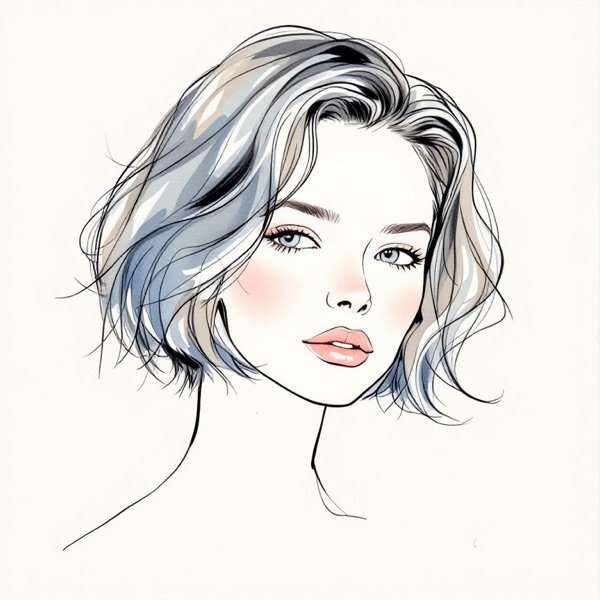
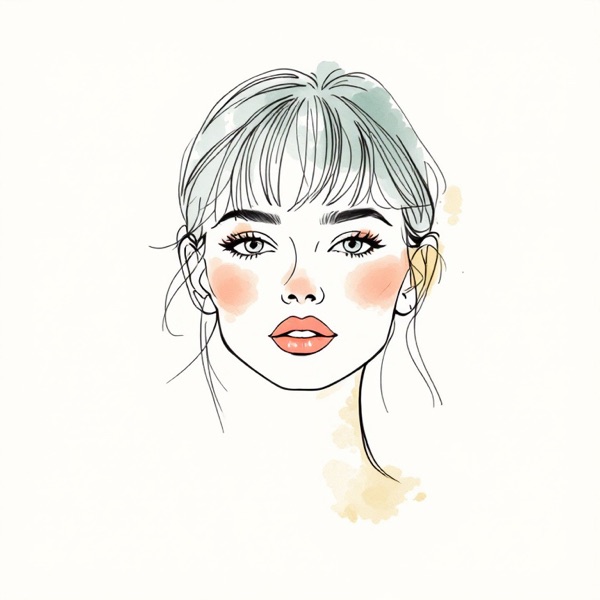
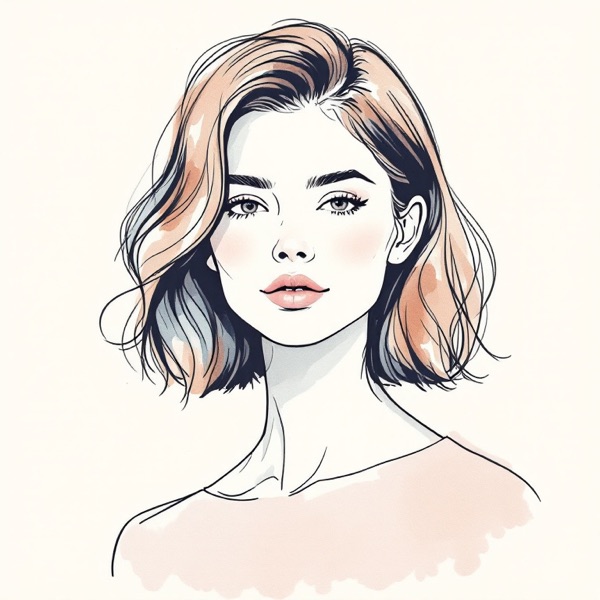
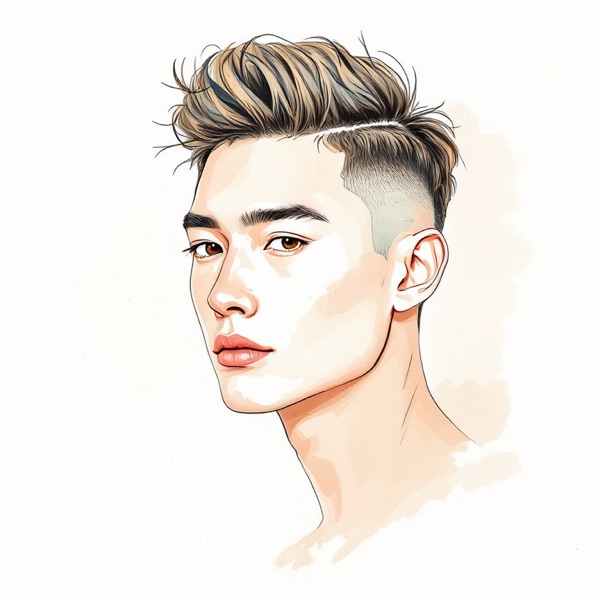
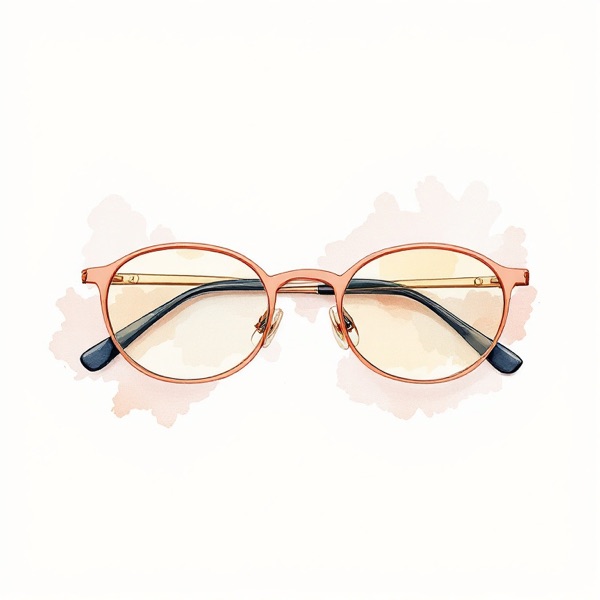
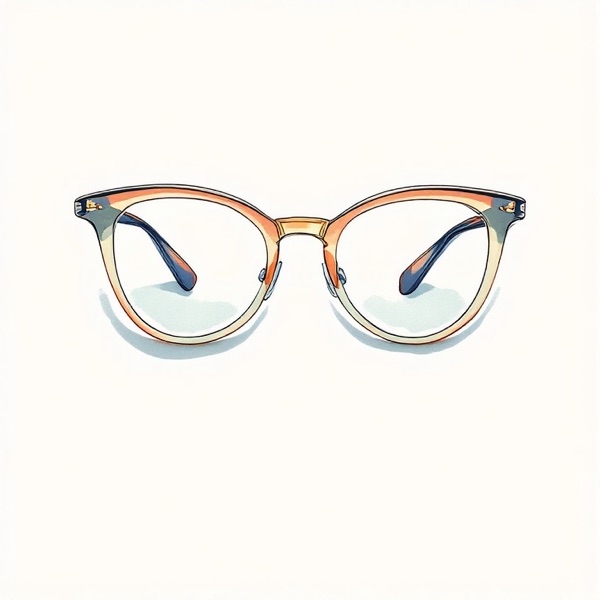
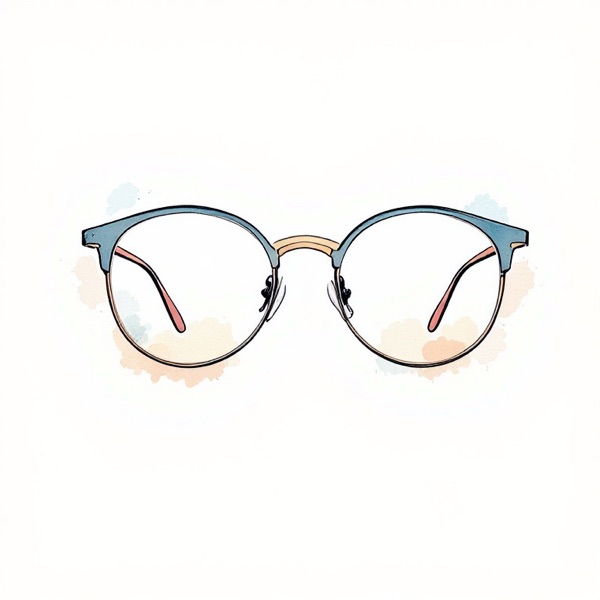
- Build width at the top. Start with volume at the crown: layers with crown volume, a half-up style with height or a pixie with volume, and on shorter hair a quiff, a textured crop with height, a moderate pompadour or a taper fade with a fuller top. Side-swept bangs or curtain bangs with lift widen the forehead. Browline frames, cat-eye frames and frames wider at the top do the same for glasses, as do a wide-brim hat or a structured cap with some height.
- Let lines end above or below the jaw, not at it. Layers that end above the jaw, shoulder-length hair with lift at the crown and small hoops that stop above the jaw all keep width away from it. A chin-length blunt bob, long hair that stops at the jaw and long drop earrings that finish there each draw a line across the widest point.
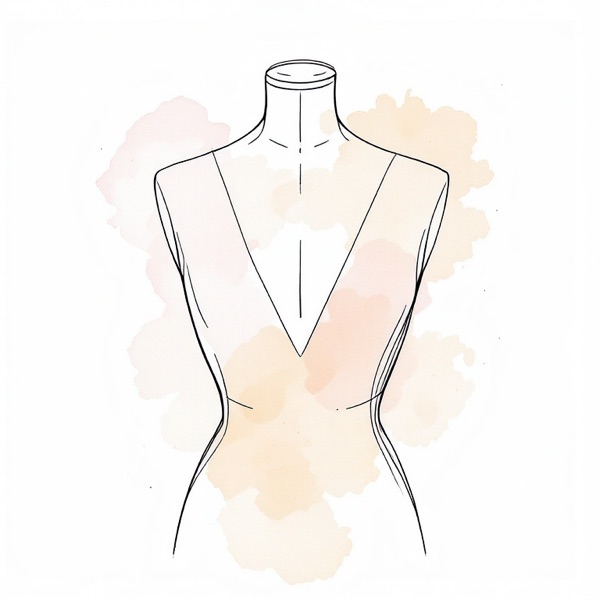
- Keep the jaw area simple. Light stubble adds texture without adding width, a close boxed beard keeps the jaw line tidy, and a small goatee draws the eye to the center of the chin. A V-neck, scoop neck or open collar opens the space below the jaw, where a boat neck or high round collar would add a widening horizontal line. Choose studs or top-heavy drops over chandeliers, and in makeup, contour along the jawline and its corners while highlighting the forehead and temples.
Styles that pull the other way keep the jaw as the dominant line: curls or flicks at the jaw, a flat buzz cut or hair slicked back flat, bottom-heavy or narrow small frames, and a tight skull cap, which narrows the top even more.
Hairstyles for a triangle face shape
Hair is the easiest way to bring width to the top of a triangle face shape, because a cut can place volume right at the forehead and temples, the narrowest part of the outline. The plan is the same at any length: volume high, sides neat, and no ends that stop at the jaw.
Women's hairstyles. Build from the crown. Layers with crown volume lift the top and widen the upper face, and a half-up style with height does the same on days you wear your hair partly back. Shoulder-length hair with lift at the crown carries the length past the jaw instead of stopping on it. For short hair, a pixie with volume on top balances a wide jaw with height. Side-swept bangs add width across the forehead, and curtain bangs with a little lift at the roots widen it without lying flat. Blow-drying the roots upward, or drying with your head tipped forward, gives these cuts their lift. The styles that move the emphasis back down are a chin-length blunt bob, which ends right at the jaw, a flat, slicked-back ponytail, and curls that gather at the jaw.
Men's hairstyles. Keep the sides neat and let the top carry the volume. A textured crop with height and a quiff both put fullness above the forehead, a side part with lift adds width at the top, and a moderate pompadour sweeps fullness up and back, widening the forehead area. A taper fade with a fuller top is an easy everyday cut for a triangle face shape: the tapered sides keep the lower half neat while the top adds width. If you prefer hair forward, a fringe with volume, textured and lifted, widens the forehead. Ask your barber to leave enough length on top to style, and a light paste will hold the lift through the day. A flat buzz cut, hair slicked back flat, or long hair that sits at the jaw leaves the jaw as the widest line.
Why photos can misread a pear-shaped face
The jaw is the widest line on this shape, and it is also easy for a photo to exaggerate.
- A low or close camera. A phone held below your chin puts the jaw nearest the lens and makes it look wider, and holding it close adds lens distortion. For a scan, keep the phone at eye height and roughly 1 m (3 ft) from your face.
- Hair at the jaw. Long hair lying over the jaw corners blurs the edge the detector measures, and on this shape that edge matters most.
- Head tilt. Tipping your chin up shows more of the jaw; tipping it down makes the forehead look larger.
- The hairline. The landmark mesh stops short of the hairline, so the detector estimates hairline-to-chin length, which helps separate square from triangle.
For everyday photos, shoot from slightly above eye level, which lengthens the jaw and shows the forehead, and turn a few degrees off center so the jaw's width is not squared to the camera. For the scan itself, face the lens straight on. And no shape is better than another: the Harmony Score in the same scan measures geometry only, not attractiveness, as the attractiveness test page explains.
Updated 2026-09-26