


Why angular glasses for round face shapes work
A round face is no more than 1.25 times as long as it is wide. It is widest at the cheekbones, the jaw is close behind at 80% of that width or more, and the jaw corners curve instead of turning. Almost every rule for glasses for round face shapes follows from those three facts: the outline is short, widest through the middle, and has no straight edges of its own.
Frames sit right across that widest band, so their shape reads against the outline more than anything else you wear. Straight edges and corners add the lines the face does not have. An outer corner that rises, or a heavy top rim, pulls the eye up and out and adds a little visual length. A round lens repeats the curve that is already there.
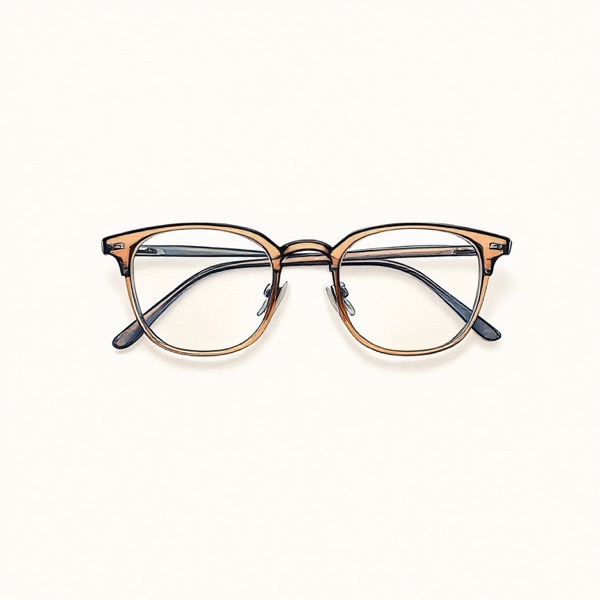
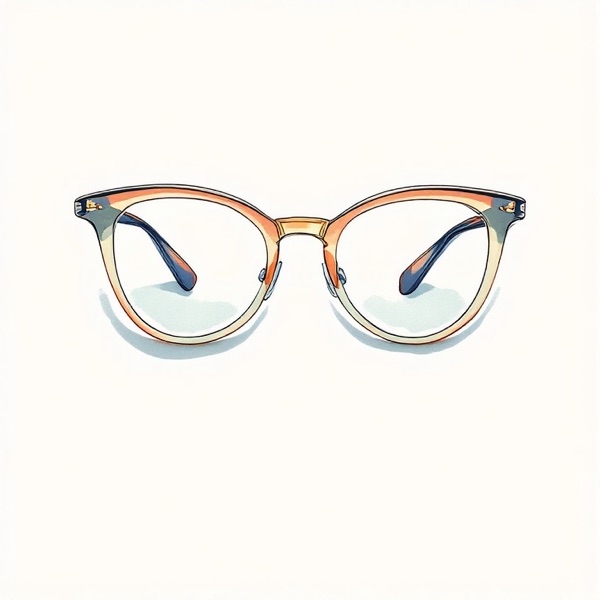
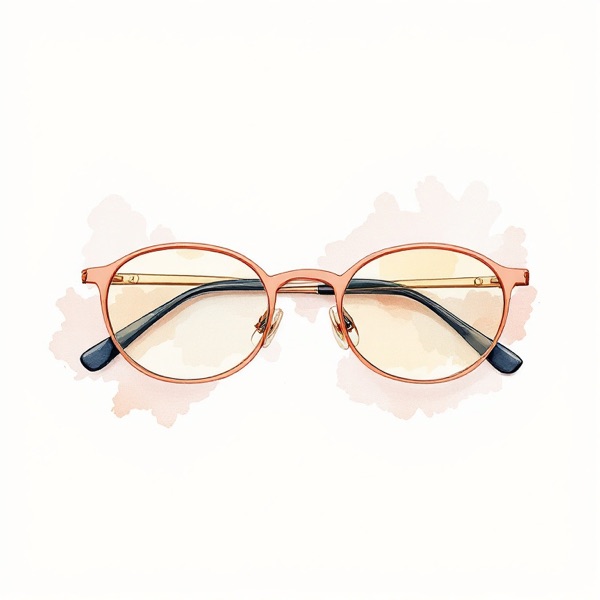
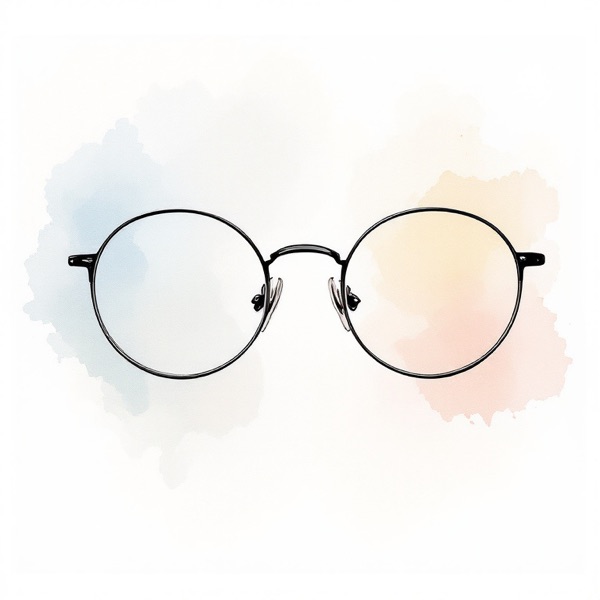
That is the logic behind the cards above. For the measurements themselves, and how round differs from square and oval, see the round face shape guide.
Square glasses for round face shapes and other angular frames
Rectangular frames are the most dependable of the three picks. A lens wider than it is tall lays a horizontal line across the widest part of the face, and its corners supply the angles a soft jaw does not. Rectangle glasses for round face shapes also come in every material and price range, so finding one in the right width is easy.
Square frames work for the same reason, with one catch: a true square lens is about as deep as it is wide, so it covers more of the cheek. Pick a square that is a touch wider than it is tall. The same frame that repeats the jaw corners on a square face is pure contrast on a round one.
Two other angular families are worth a try:
- Wayfarer-style frames. The top edge is wider than the bottom and nearly flat, with a slight upward angle at the outer corners: a firm brow line and a small lift in one frame.
- Geometric frames. Hexagonal and octagonal lenses turn a curve into flat sides, often in thin metal, for angles without a heavy rim.
Cat-eye and browline frames: lift and a strong top line
Cat-eye frames rise at the outer top corner. That upswept point adds an angle near the temple and draws the eye upward, so the outline reads a little longer. The lift can be a gentle flick or a sharp wing; the geometry is the same.
Cat-eye glasses for round face shapes work best with a fairly straight lower edge. Frames that curve back into a deep, rounded bottom bring the circle back below the eye.
Browline frames put their strength on top: a thick acetate bar along the brow over a thin metal or rimless lower half. The heavy top line adds definition at the brow, and the light bottom keeps the frame quiet at cheek level. It is a mid-century style that works just as well on men as on women. For both ideas at once, look for a browline with slightly raised outer ends.
Getting the width, height and bridge right
Shape gets you most of the way; fit decides whether its lines actually show. Four checks matter most with glasses for round face shapes:
- Width at the temples. The frame front should be about as wide as your face at the temples, or a few millimeters wider. A narrower frame looks small against the face, and the width beyond the hinges stands out by contrast.
- Lens height. Keep the lenses wider than they are tall. The lower rim should clear your cheeks when you smile; if the frame lifts as you smile, the lenses are too deep or the frame sits too low. With progressive lenses, ask your optician for the minimum lens height before choosing a very shallow rectangle.
- Bridge. A bridge that holds the frame high on the nose lines the top rim up with your brows and leaves more visible length below the lenses. If frames slide down or rest on your cheeks, look for adjustable nose pads or a low-bridge fit.
- Rim thickness. Thick acetate draws a strong line that reads from across a room. Thin metal relies on the lens shape alone, so choose a clearly angular one.
To compare sizes, look inside the temple arm. Most frames print three numbers there, such as 52-18-145: lens width, bridge width and temple length in millimeters. Online listings usually add the total frame width, so measure a pair that fits you well and compare.
Glasses for round face women and men: what changes
The geometry does not change. The cards above are the same for everyone, because a frame responds to the outline of the face, not to who wears it. What differs is the range in stores and what the frames sit next to.
Women. Women's collections carry more cat-eye shapes, from a soft upsweep to a pronounced wing, and more rectangles that flare slightly at the outer corners. Hair works with the frames: a side part with crown volume or a high ponytail adds height above them, and long layers past the chin add a vertical line below.
Men. Men's collections lean toward rectangles, browlines and wayfarer-style frames, often in wider sizes, so check the total width against your temples. A goatee with some length or stubble with crisp, defined edges adds angles near the chin, and a quiff adds height above the forehead.
Unisex frames are sized by measurement, not by label. For cuts that pair well with these frames, see the hairstyles for round face guide.
Sunglasses for a round face
Sunglasses follow the same rules as glasses for round face shapes, at a larger scale. A dark lens reads as a solid shape, so its outline stands out even more.
- Wayfarer-style and square sunglasses add a straight top line and corners.
- Cat-eye sunglasses lift the outer corners, as the optical version does.
- Aviators work best in a squared shape with a straight top bar. A classic teardrop lens is deep and rounded at the bottom and reaches down toward the cheeks.
Larger square sunglasses are fine while the corners stay angular and the frame stops near your temples. Skip small round lenses and big round ones, and check the width before ordering online, since sunglasses are often cut wider than optical frames.
Frames to skip, and when round frames still work
Small round frames and oversized round frames are the two drawn skips, for one reason: both repeat the circle of the face, one small and one large. Two frames that are not drawn also work against the shape:
- Frames narrower than your face at the temples, which look small against the cheekbones.
- Heavy lower rims, which put the frame's strongest line at cheek level instead of at the brow.
Guides to glasses for round face shapes often rule out round lenses entirely, but the geometry is more specific than that. Round frames can work with thin rims, a lens slightly larger than the eye area rather than a small circle, and a top edge that is flat or sweeps upward. A flat-topped round, often sold as a panto shape, keeps the soft lower curve but adds a straight line at the brow.
If your scan comes back oval, or Between Round and Oval, round frames move to the try list, since an oval face carries them well.
Check your face shape before you buy
A face that looks round in a close-up selfie often measures differently, so it is worth checking before you order glasses for round face shapes. A front camera held near the face widens its middle, a lowered chin shortens it, and a smile lifts the cheeks. It is common to expect round and then measure oval, or Between Round and Square, from a photo taken straight on at about 1 m (3 ft).
The face shape detector measures your length, widths and jaw corners from one selfie; the same scanner sits at the top of this page. It is free, it runs in your browser, and the photo never leaves your device. Take your glasses off for the scan and push your hair back from your forehead and jaw.
Then match the frames to the result:
- Round: the three picks above, sized to your temples.
- Between Round and Oval: rectangular and wayfarer-style frames suit both, and thin round frames are back on the list.
- Between Round and Square: cat-eye and browline frames add lift without heavy corners, as does a thin rectangle with softened corners.
- Oval or square: see the oval face shape and square face shape guides, or the glasses for face shape chart for all seven.
Updated 2026-09-27