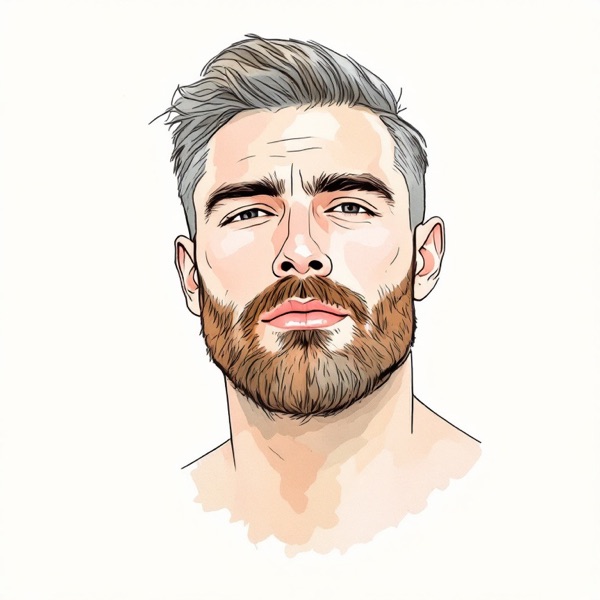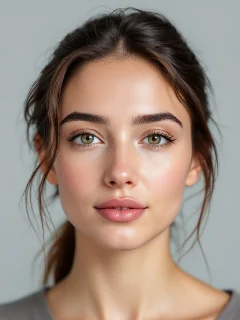
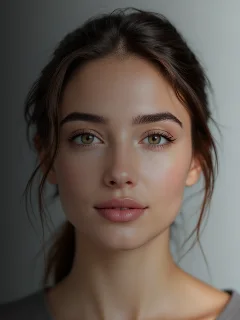
Oblong face shape: long, with even widths
An oblong face shape is clearly longer than it is wide, and its width barely changes from top to bottom. Forehead, cheekbones and jaw all measure within about 10% of each other, so the sides of the face run in fairly straight lines, and the jaw corners can be soft or sharp. Measured from hairline to chin, the length is at least about 1.5 times the cheekbone width.
You will also see it called a long face shape or a rectangle face shape. Some guides keep "rectangle" for long faces with sharper jaw corners. The detector here treats both as oblong: the defining measurement, length against even widths, is the same, and so is the styling advice.
Oblong, oval or square?
The two shapes closest to an oblong face shape each share one of its features but not the other.
- Oval can be almost as long, but the cheekbones are clearly the widest point and the jaw tapers toward a rounded chin. The boundary sits around a ratio of 1.5, and a face right there may come back as Between Oval and Oblong. The oval face shape page covers that side of the line.
- Square has the same even widths, but it is much shorter, at most about 1.3 times as long as it is wide, with angular jaw corners. Think of a square face shape as the short version of the same straight-sided outline.
How to measure an oblong face shape at home
A soft tape measure and a mirror are enough.
- Measure your face length from the center of your hairline to the bottom of your chin.
- Measure your cheekbone width straight across, between the outer points of the cheekbones.
- Measure your forehead width at the brow line and your jaw width from one jaw corner, just below the ear, to the other.
Divide the length by the cheekbone width. For example, with cheekbones at 13 cm (5.1 in), a length of 19.5 cm (7.7 in) or more puts the ratio at 1.5 or above. Then compare the three widths: on an oblong face shape, none stands out from the others by more than about 10%.
The face shape detector runs the same comparison on a selfie, placing 478 landmark points in your browser without uploading the photo. Its face mesh begins at the top of the visible forehead, not at the hairline, so it estimates the full length before deciding the shape. That is also why the length ÷ width number in your free result looks lower than your tape-measure figure: it is the raw on-screen ratio. The cut-offs are still being tuned on annotated test photos, so read them as guides rather than hard lines.
Hairstyles for an oblong face shape: add width
A long face reads longer when a style adds vertical lines and shorter when it adds horizontal ones. That single idea covers most choices:
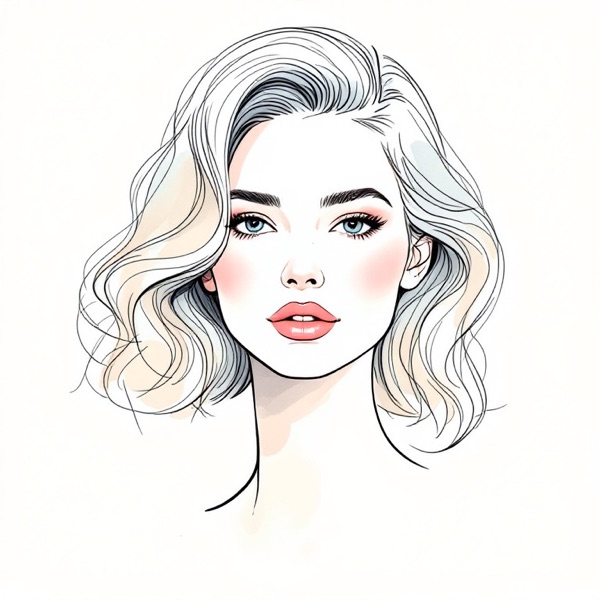
- Fullness at cheekbone level. Side-swept waves, layers that start at the cheekbones, a layered lob or, for shorter hair, medium length with full sides.
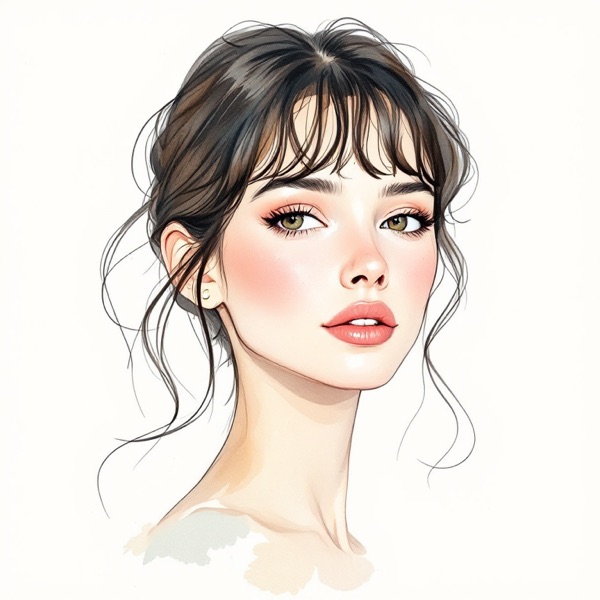
- Part of the forehead covered. Curtain bangs, wispy full bangs or a French crop shorten the visible length; a blunt fringe with a bob shortens and widens in one cut.
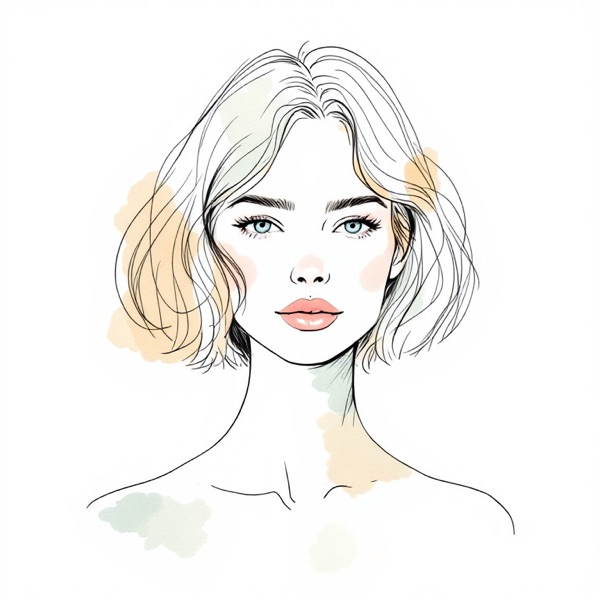
- Hair that ends near the jaw. A chin-length bob puts fullness exactly where the face gains from width.
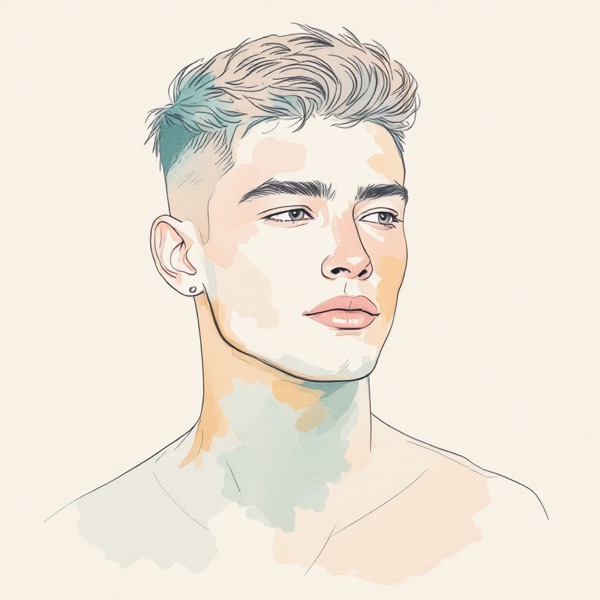
- A low top. A low textured crop, a low-volume side part or a low side bun adds no height.
The styles that work against this are the ones that stretch: long straight hair with no layers, a high pompadour or top knot, and slicked-back hair that shows the full forehead.
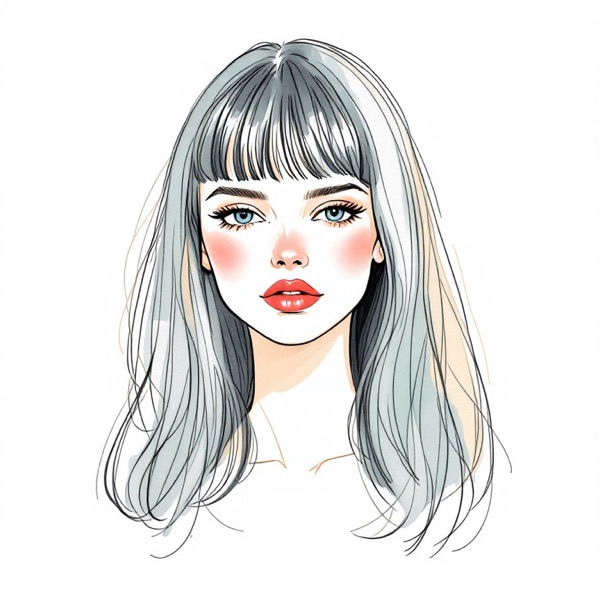
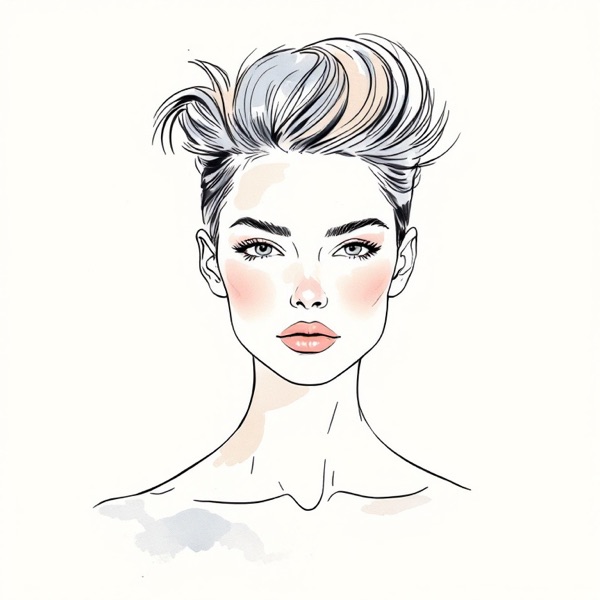
Women's hairstyles. A chin-length bob adds width in a single cut: it ends at the jaw, so the fullness sits beside the lower face instead of below it. Ask for a little bend or texture at the ends so the bob moves outward rather than hanging straight. Curtain bangs cover the upper forehead and part in the middle, which breaks the vertical line of an oblong face shape without a hard edge, and they grow out gently. Side-swept waves bring width to cheekbone level; brush them out at the sides so the volume stays there instead of dropping below the jaw. A layered lob gives the same effect with more length to play with, since the layers start at the cheekbones and the ends stop near the collarbone. Wispy full bangs are a softer alternative to a blunt fringe, and a low side bun keeps an updo from adding height. If you like your hair long, keep layers through the sides and some wave, and for a ponytail leave the bangs or a few face-framing pieces out rather than slicking everything back. Bangs of either kind need a trim every few weeks to keep them sitting at the brows rather than in your eyes.
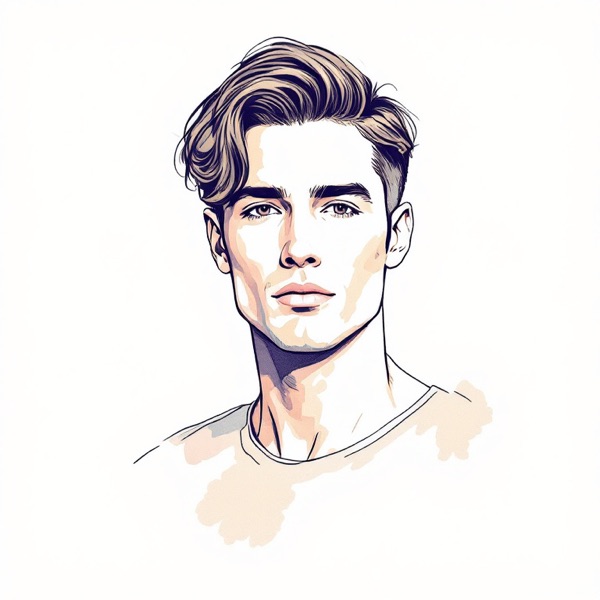
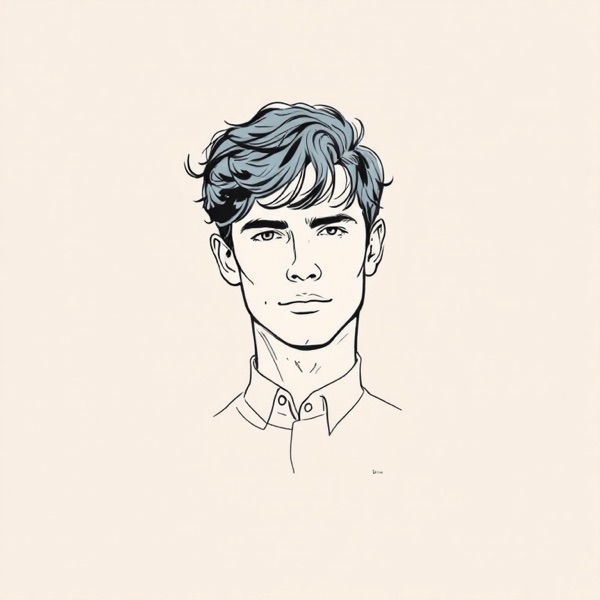
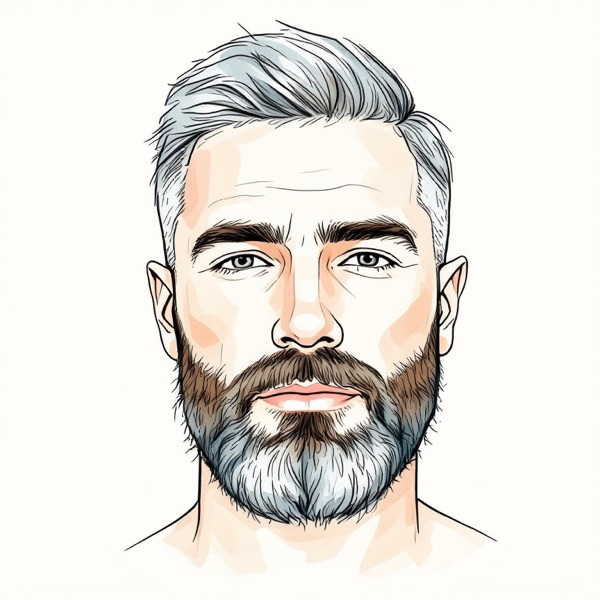
Men's hairstyles. Short hair suits an oblong face shape as long as the top stays low. A low textured crop is the simplest version: short on top, a little fuller at the sides, with the texture worked forward instead of up. Ask for some length to stay over the ears rather than taking the sides down to the skin, because that fullness is what adds width. A low-volume side part is the tidy everyday option; comb it across and let it lie flat instead of blow-drying it upward. A curtain fringe, parted in the middle and falling toward the temples, covers part of the forehead, and a French crop does the same with a short forward fringe and a neater finish. If you grow it out, medium length with full sides or a shaggy mid-length cut pushes texture outward rather than up. For product, a matte clay or paste worked in with your fingers adds texture without lift, while a high-shine pomade usually goes with the slicked-back look you are steering away from.
Natural texture can do some of this work. Waves and curls spread sideways on their own, so they add width at the cheekbones with little styling; ask for layers that start around the cheekbones and keep the crown fairly flat so the volume stays at the sides. With straight or fine hair, a loose bend at cheekbone level, made with a round brush or a few large rollers, gives a similar effect for the day.
Beards follow the same rule. A full beard kept fuller at the cheeks and short at the chin, heavy stubble or a beard with its growth concentrated at the sides adds width along the jaw without adding length. In that sense, styling an oblong face shape is the mirror image of styling a round face shape, where the aim is length.
Glasses and accessories for an oblong face shape
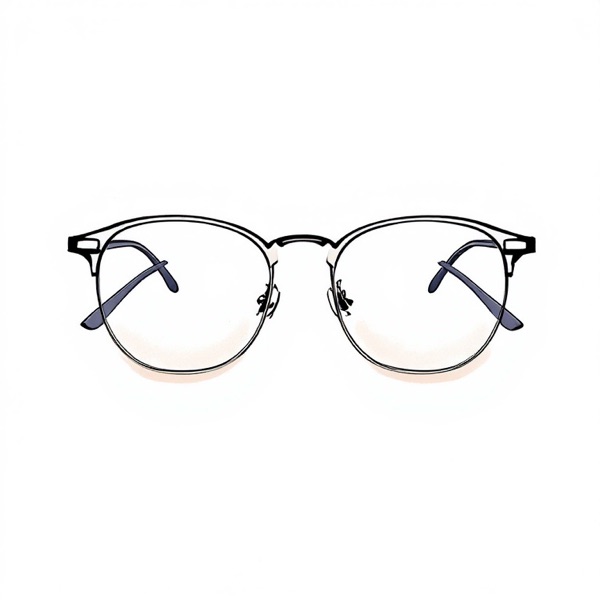
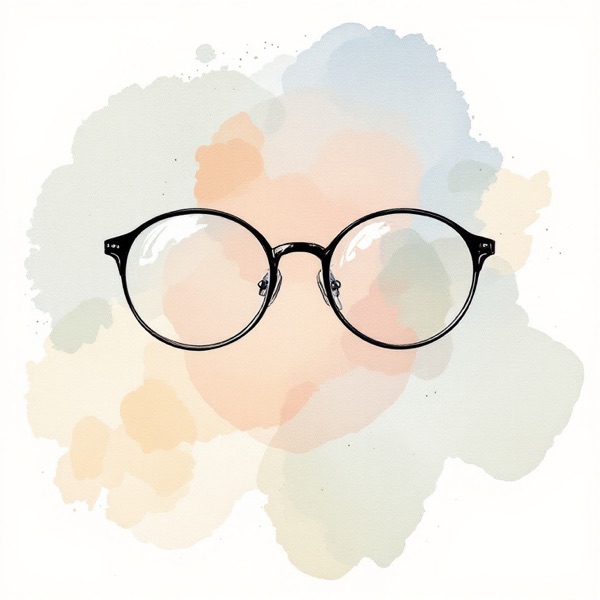
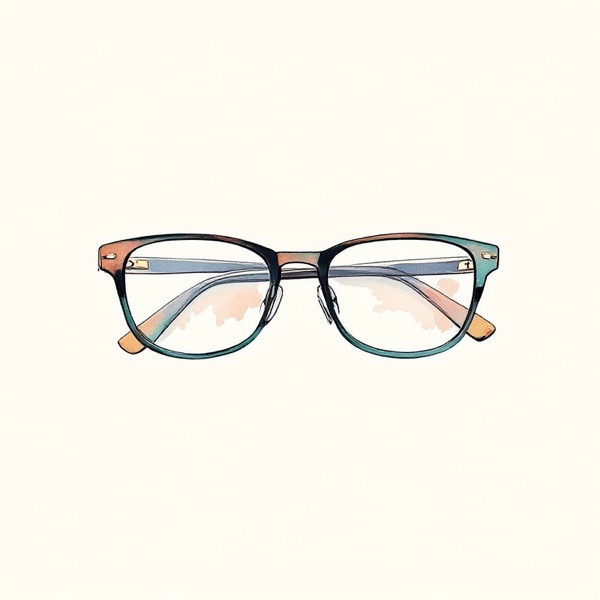
Choose glasses with depth. Frames sit across the middle of the face, so on an oblong face shape they can break up the length instead of adding to it. Tall frames have lenses deep enough to fill more of the face's height, from just under the brows toward the tops of the cheekbones, which leaves less length showing above and below. Oversized round frames add width at cheekbone level, and frames with decorative temples, such as a contrasting color, a metal detail or a thicker arm, pull the eye sideways toward the ears. The ones to pass on are narrow rectangular frames, whose shallow lenses make the face look longer by contrast, and small frames, which leave a lot of face showing above and below the lenses. When you try a pair on, check the gaps between the top of the frame and your brows and between the bottom of the lenses and your cheekbones: the smaller both gaps are, the shorter the face reads.
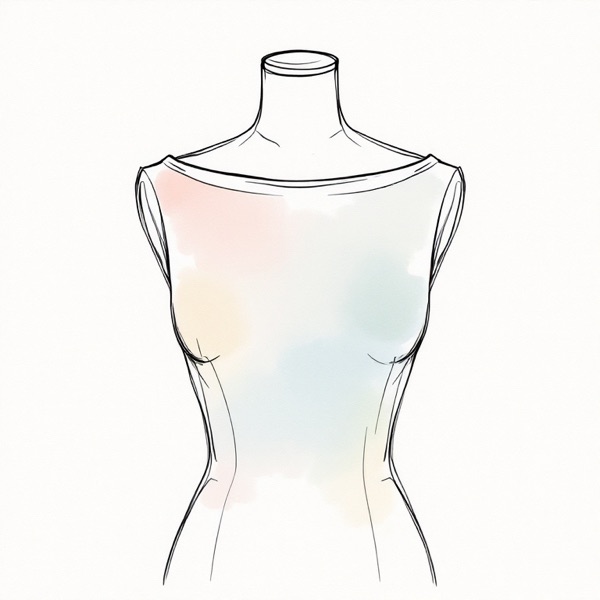
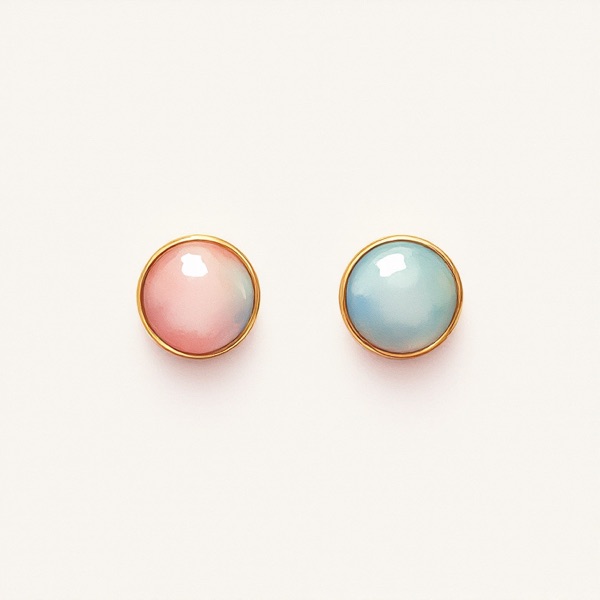
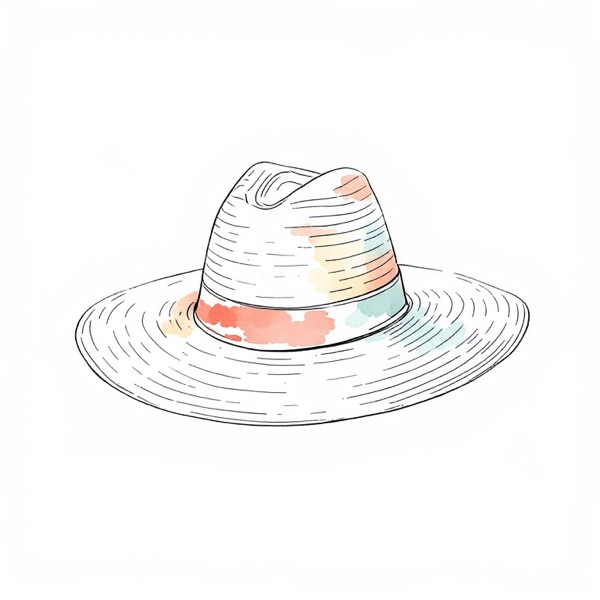
Horizontal lines help elsewhere too. A crew neck stops the eye at the collarbone, a boat neck adds a wide line, and a spread collar adds width beside the jaw, while a deep V-neck or a narrow turtleneck continues the vertical. Round studs, button earrings and short hoops that end above the jaw add a touch of width; long linear drops and narrow chandeliers add length. A wide brim with a low crown, or a flat cap, sits low; a tall slouchy beanie adds height.
With makeup, a little contour at the top of the forehead and the tip of the chin shortens the visible length, and highlight across the tops of the cheekbones and under the eyes adds width.
Camera angles that stretch a face
A photo can make a face look longer than it is. Shooting from above tends to lengthen it, and a phone held close distorts the proportions. Bangs work the other way, shortening the visible face. For the scan, set the camera about 1 m (3 ft) away at eye level, look straight into it with a relaxed expression, pull your hair off your forehead and jaw, and use even light. For everyday photos, keep the camera at eye level and try a small sideways head tilt, which shows the cheekbones and reads shorter. Hair left loose at the sides adds width to the frame, and a crew neck or spread collar puts a horizontal line along the bottom of the picture.
Updated 2026-09-26